


How Paraffin Gauze Dressing Works on a Wound
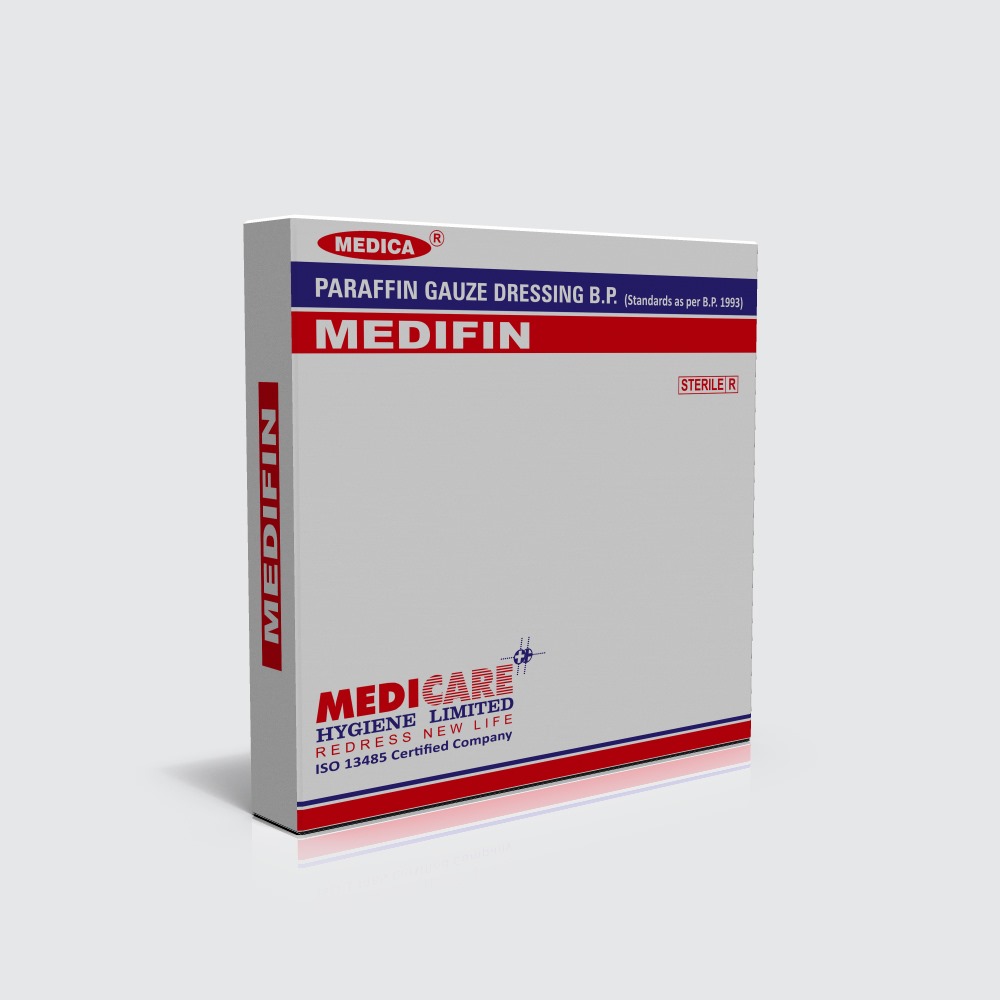
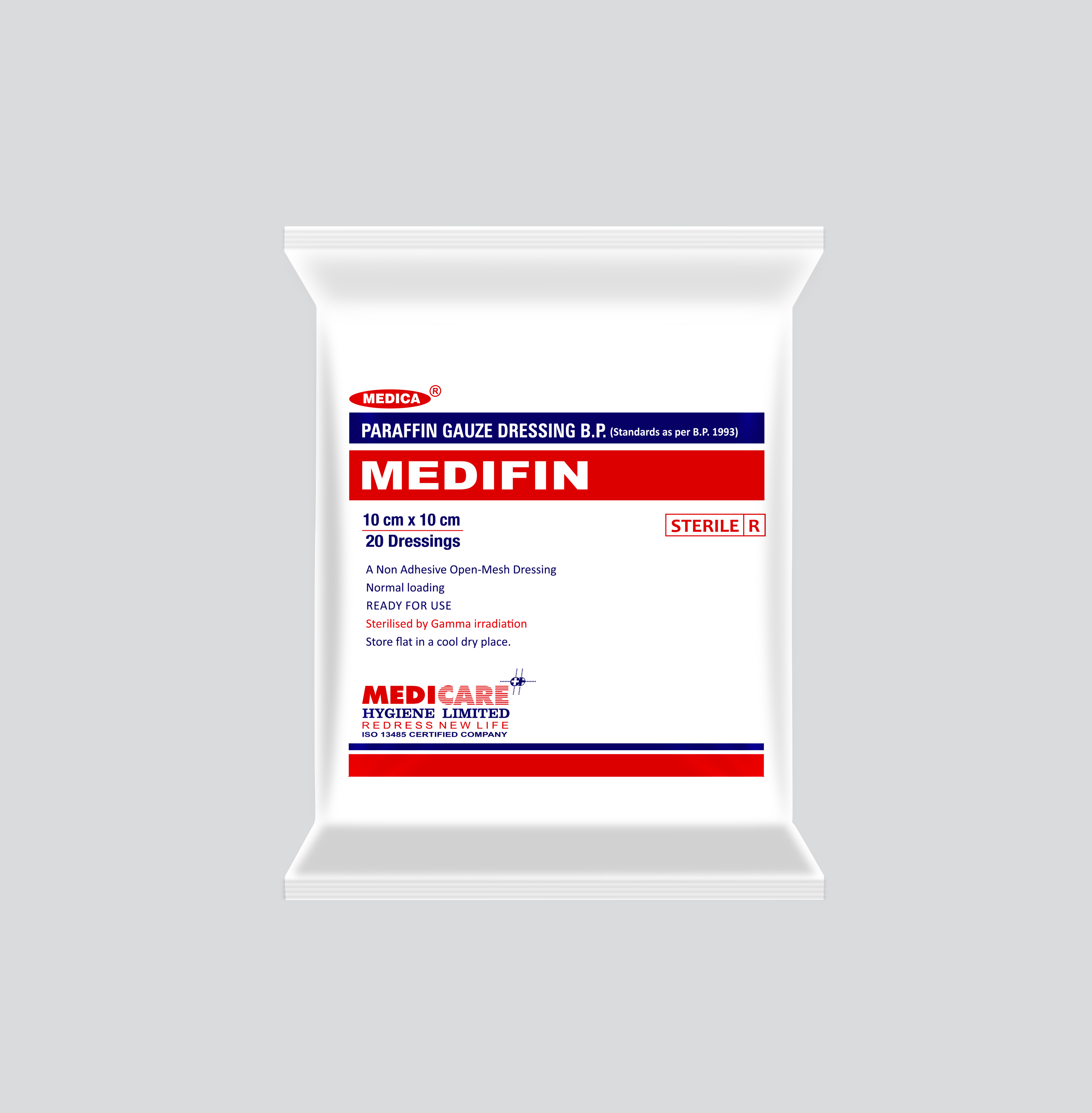
Medifin is a leno-weave cotton gauze coated with white soft paraffin — a low adherent, non-medicated primary contact layer. The paraffin keeps the mesh from sticking directly to the wound bed, while the open weave lets exudate pass through to a secondary absorbent dressing placed on top. It doesn’t absorb fluid itself, so that secondary dressing is required, especially on wounds with moderate to heavy discharge.
Paraffin Gauze for Burns, Grafts, and Other Approved Uses
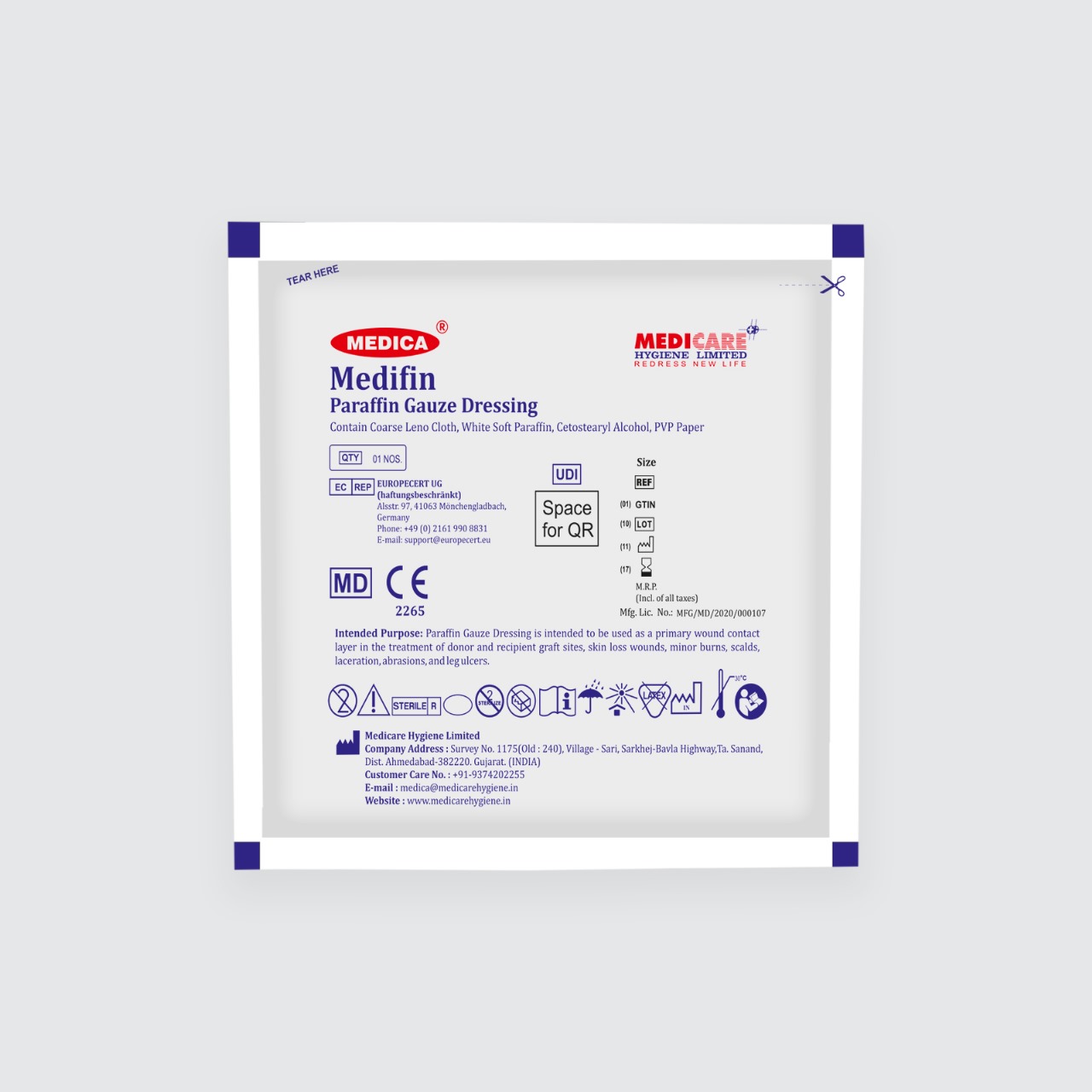
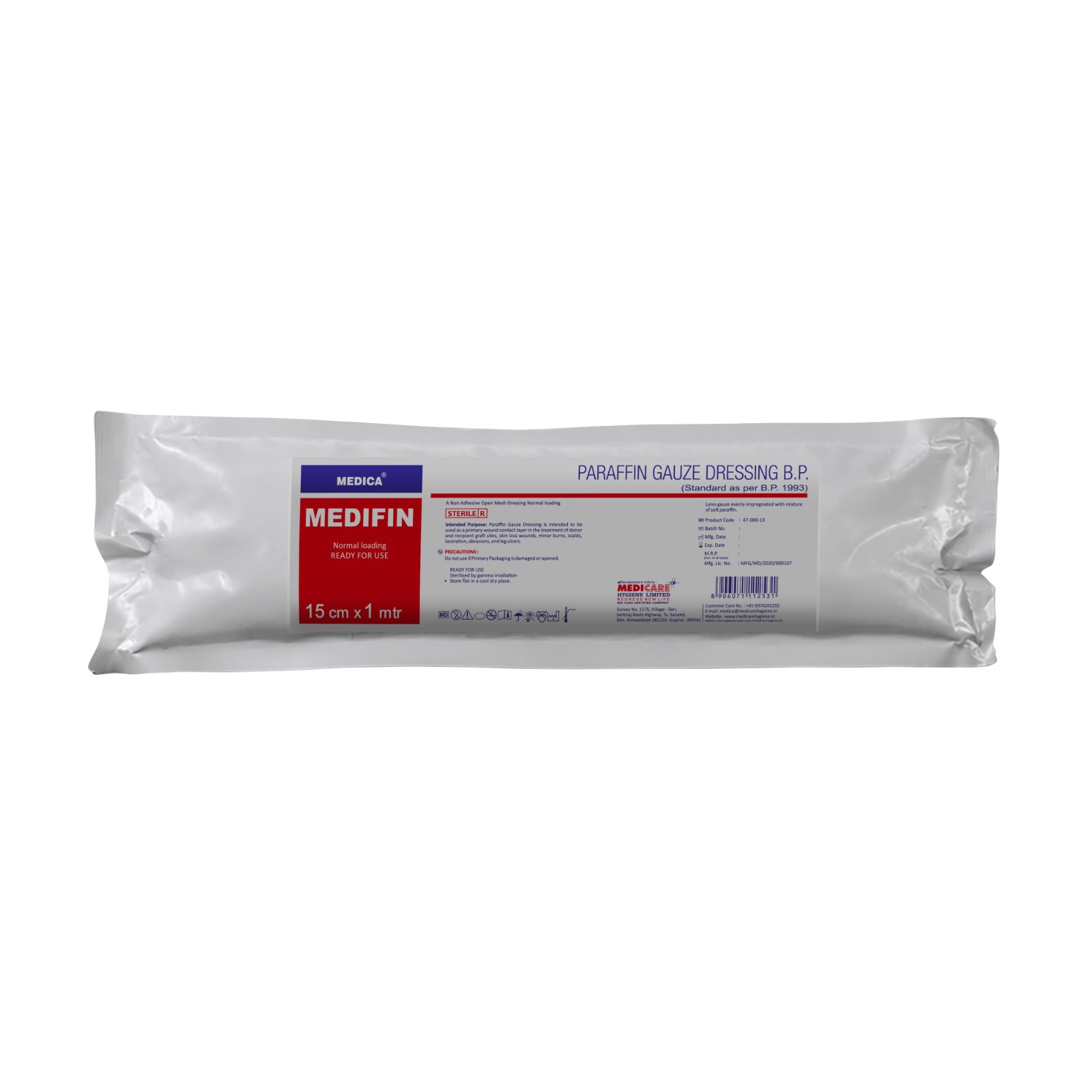
This sterile paraffin gauze dressing is indicated for minor burns and scalds, donor and recipient graft sites, skin-loss wounds, abrasions, lacerations, and leg ulcers (the last only under medical supervision). It’s gamma-sterilised, single-use, and individually packed, with a 4-year shelf life when stored below 30°C in a dry place away from sunlight. It should not be used on cavity wounds or on heavily exuding wounds without an adequate secondary dressing.
Why Medifin Is Described as a Low-Adherent Gauze Dressing
Medifin is described as low adherent rather than non-adherent, and that distinction matters in practice. If left in place for a prolonged period, the dressing may become adherent and cause tissue damage during removal — which is why the IFU recommends changing it frequently rather than leaving it for extended intervals. The exact frequency depends on how much the wound is draining.
 Non-Adherent
 Non-allergenic
 Soothing agent
 Absorbent Dressing
 Gamma Sterile
 Soft paraffin base